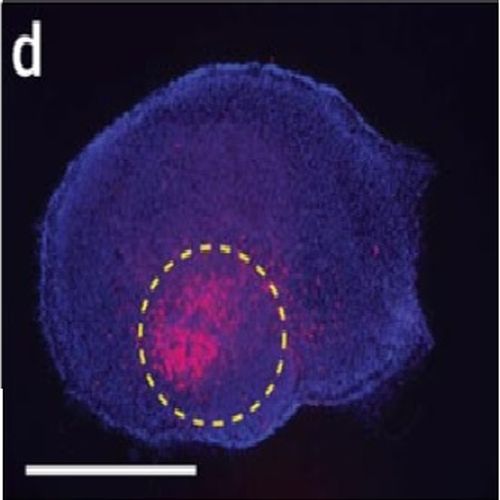
High spatial and temporal resolution of conditional gene expression is typically difficult to achieve in whole tissues or organisms. We synthesized two reversibly inhibited, photoactivatable ('caged') doxycycline derivatives with different membrane permeabilities for precise spatial and temporal light-controlled activation of transgenes based on the 'Tet-on' system. After incubation with caged doxycycline or caged cyanodoxycycline, we induced gene expression by local irradiation with UV light or by two-photon uncaging in diverse biological systems, including mouse organotypic brain cultures, developing mouse embryos and Xenopus laevis tadpoles. The amount of UV light needed for induction was harmless as we detected no signs of toxicity. This method allows high-resolution conditional transgene expression at different spatial scales, ranging from single cells to entire complex organisms.
Authors
Cambridge SB, Geissler D, Calegari F, Anastassiadis K, Hasan MT, Stewart AF, Huttner WB, Hagen V, Bonhoeffer T